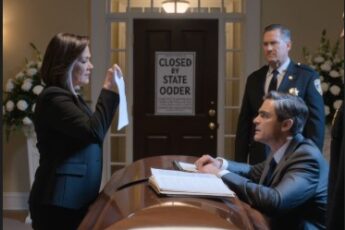
The police found stolen medication in my locker ten minutes before the hospital board voted to revoke my nursing license.
My best friend stood beside them and said she had watched me take it.
Then a dying patient raised his hand and asked them to play the message hidden inside his heart monitor.
My name is Teresa Miller. I’m forty-seven, and I live in Youngstown, Ohio.
I had been a nurse at St. Matthew’s Hospital for twenty-two years.
I worked holidays.
Double shifts.
Nights when the hallways smelled of disinfectant and burnt coffee.
I held frightened hands when families could not arrive in time.
Nursing was not just my job.
It was the only career I had ever wanted.
My closest friend, Beth, worked beside me for fifteen years.
We shared lunches.
Covered each other’s shifts.
She helped me through my divorce.
When her husband lost his job, I loaned her money without asking when she could repay it.
I trusted her more than anyone.
Then pain medication began disappearing from our cardiac floor.
The missing doses were small at first.
Then entire boxes vanished.
Hospital security opened an investigation.
I was not worried.
I had done nothing wrong.
But on Monday morning, two officers entered my patient’s room while I was checking his IV.
They asked me to step into the hallway.
Inside my locker, they found sealed medication bottles wrapped in one of my sweaters.
My name was printed on the pharmacy release sheet.
My access code had opened the medication cabinet after midnight.
I felt sick.
“That is not mine.”
Beth stood behind the nursing supervisor.
Her eyes were red.
“I saw Teresa near the cabinet,” she whispered.
I stared at her.
“You know that is not true.”
“I cannot lie for you.”
“You are lying about me.”
She looked away.
The board called an emergency hearing that afternoon.
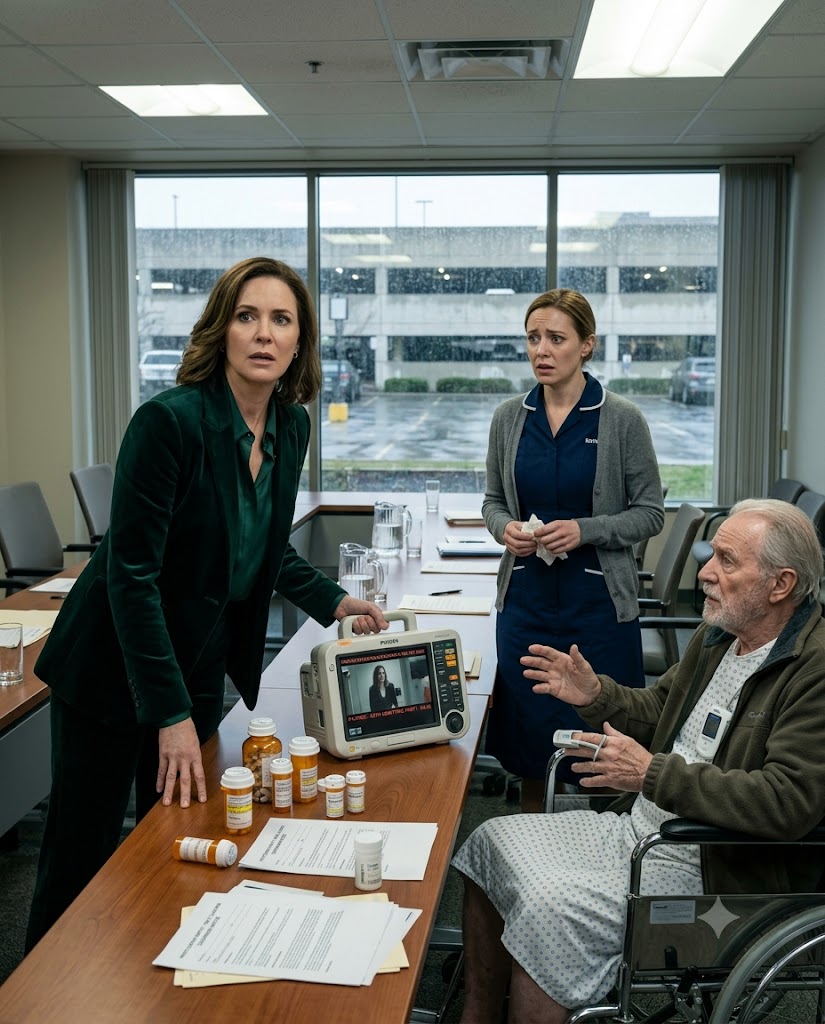
The conference room overlooked the hospital parking garage.
My uniform still smelled like antiseptic.
My hands would not stop shaking.
The hospital attorney placed the bottles on the table.
If the board believed I had stolen controlled medication, I would lose my license.
I could also face prison.
Beth sat across from me.
She claimed I had confessed that I needed money.
She said I planned to sell the medication.
Every word was false.
“Why are you doing this?” I asked.
She pressed a tissue to her eyes.
“I tried to help you.”
“No. You tried to destroy me.”
The board chair raised his hand.
Then the door opened.
An orderly pushed in my patient, Mr. Lawson, still connected to a portable heart monitor.
He was seventy-nine and waiting for major surgery.
The hospital attorney stood.
“This meeting is confidential.”
Mr. Lawson lifted one trembling hand.
“So was the conversation I heard last night.”
Beth’s face changed.
He pointed toward his monitor.
“My hearing aids connect to this device. When someone entered my room, the monitor recorded their voice automatically.”
The technician removed a small memory card.
Beth rose from her chair.
“That patient is confused.”
Mr. Lawson looked directly at her.
“No, ma’am. I heard you tell someone exactly where you planned to hide those bottles.”
The recording began.
Beth’s voice filled the room.
“Once they find the medication in Teresa’s locker, she will lose her license. Then no one will examine the missing charity funds, because everyone will believe she stole those too.”
The hospital director leaned forward.
“What charity funds?”
A second voice answered on the recording.
The voice belonged to someone inside the room.
And it said, “After Teresa is arrested, transfer the final payment to my account and—”
👇👇 Part 2 in the comments👇👇
=== PART 2 — goes in the comments ===
“—delete every donation record before the audit begins.”
The hospital finance director went pale.
He was sitting three chairs from me.
Beth dropped back into her seat.
The recording continued.
Together, they had stolen nearly four hundred thousand dollars from a hospital fund created to help uninsured heart patients.
Beth used her nursing access to obtain patient names.
The finance director created fake assistance payments.
Then they transferred the money to accounts controlled by relatives.
I had discovered several mismatched invoices two weeks earlier.
I mentioned them to Beth because I trusted her.
That was when they decided to frame me.
The finance director copied my access code from a maintenance report.
Beth entered the medication room wearing my spare jacket.
She planted the bottles in my locker.
She also forged my signature on the pharmacy sheet.
The technician displayed security footage from a hallway camera.
It showed Beth entering the locker room at 2:13 a.m.
She carried the same sweater later found around the medication.
Beth began crying.
“Teresa, I was going to return the money.”
“You were going to send me to prison.”
“I had debts.”
“So you chose my life instead of your own consequences.”
Hospital security locked the conference-room doors until police arrived.
Beth and the finance director were arrested.
Investigators recovered most of the stolen charity money.
The medication had never left the hospital inventory system because the bottles Beth planted were already expired and marked for disposal.
My access logs were corrected.
Every accusation against me was withdrawn.
The state nursing board cleared my license.
The hospital offered me a settlement and a promotion.
I accepted the settlement.
I refused the promotion.
Instead, I became the new supervisor of the patient assistance program.
Mr. Lawson survived his surgery.
When he returned for a checkup, he handed me a small card.
It said, “Thank you for believing sick people deserve dignity.”
I framed it above my desk.
Beth tried to make my kindness look like guilt.
But the patient she thought was too weak to matter became the reason the truth was finally heard.