My Brother-in-Law Used My Late Father’s Workshop for a Weekend Party Without Permission — He Thought He Got Away With It Until My Surprise Arrived Monday Morning
When my father passed away three years ago, he left me one thing that mattered more than anything else.
His old woodworking workshop.
It wasn’t valuable because of the building.
It was valuable because of the memories.
Every shelf had been built by his hands.
His handwritten measurements were still penciled onto the workbench.
The smell of cedar always reminded me of childhood Saturdays spent making birdhouses together.
I visited every month just to keep the place clean.
Then my brother-in-law, Tyler, asked if he could borrow it for a weekend gathering.
I politely said no.
Tyler had a history of treating other people’s property like it belonged to him.
He never cleaned up after himself.
He laughed off broken things with,
“It’s not a big deal.”
I wasn’t willing to risk the one place that still felt connected to my father.
A week later, I drove out to the workshop.
Halfway down the gravel road, I heard loud music.
My stomach dropped.
Cars filled the driveway.
The workshop doors were wide open.
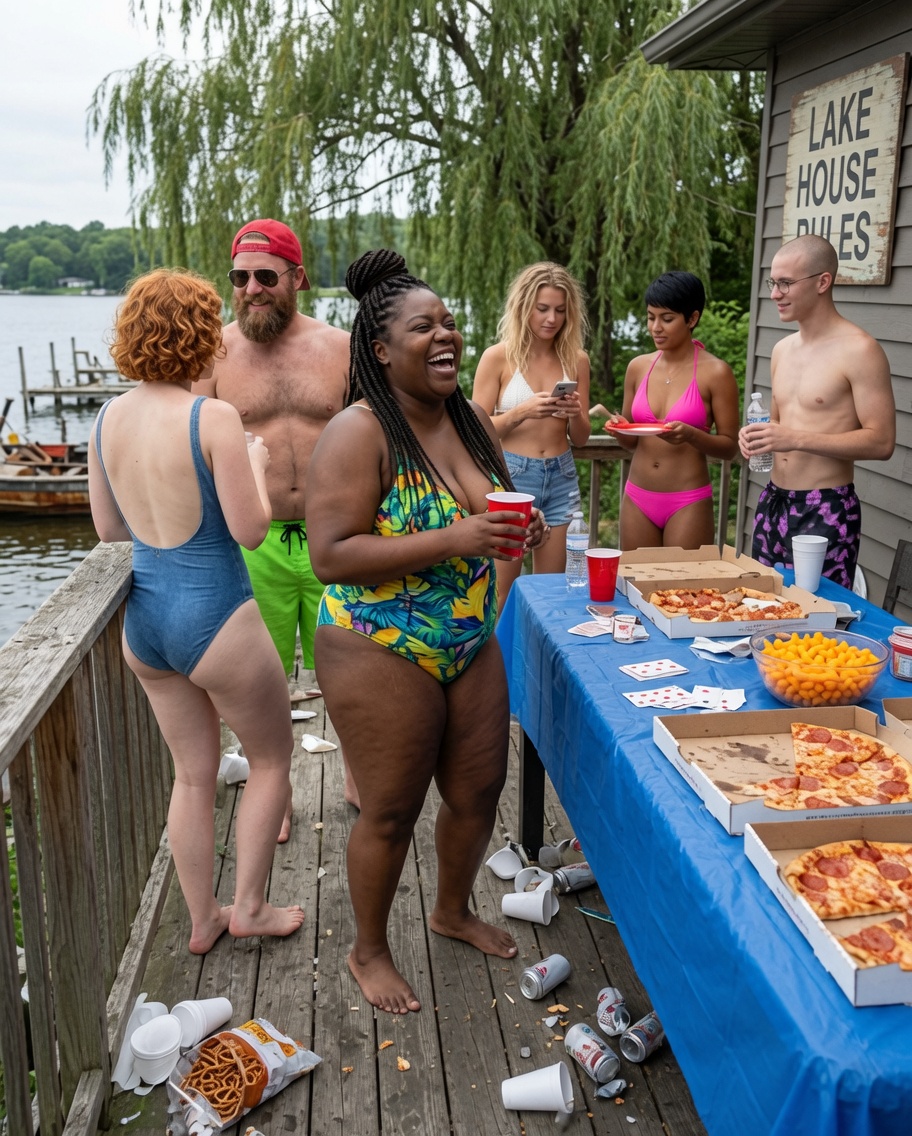
Inside, dozens of strangers were eating, dancing, and laughing.
Someone had placed drinks on my father’s workbench.
Another person was sitting on the handmade rocking chair Dad built for my mother.
Tyler stood in the middle of the room smiling proudly.
He had somehow gotten a copy of my spare key.
I quietly backed out before anyone noticed me.
I sat in my car.
For a moment, I considered calling the police.
Then another idea came to mind.
And by Monday morning…
Tyler would wish I had called them instead.
👇👇 Part 2 in the comments 👇👇
PART 2
I drove home without saying a word.
I didn’t yell.
I didn’t argue.
Instead, I opened a folder I’d kept ever since inheriting the workshop.
Inside were photographs.
An inventory of every tool.
Insurance records.
And something Tyler had completely forgotten about.
The workshop belonged to a local historical woodworking association.
My father had donated it years earlier under one condition:
If the building was ever used for purposes outside the agreement, the association had the right to revoke all access privileges and recover any repair costs from the person responsible.
I picked up the phone.
The association’s director answered.
I calmly explained what had happened.
He sighed.
“I was hoping we’d never have to use that clause.”
Early Monday morning, the director, two volunteers, and I drove to the workshop.
Tyler was already there.
He looked exhausted.
Apparently, he had spent most of Sunday cleaning.
He smiled nervously when he saw us.
“Everything’s spotless now.”
The director smiled politely.
“I’m glad.”
He handed Tyler a folder.
“What’s this?”
“A maintenance report.”
Tyler opened it.
Inside were photographs taken before the party.
Then photographs taken afterward.
Although most of the trash was gone, there were still problems.
Scratches on the workbench.
A cracked cabinet door.
Water rings on handmade furniture.
Dust from decorations inside old woodworking equipment.
Nothing catastrophic.
But enough to require professional restoration.
Tyler looked pale.
“I cleaned everything.”
The director nodded.
“I can see that.”
“But cleaning after damaging someone else’s property doesn’t erase the damage.”
He handed Tyler another document.
“This is the restoration estimate.”
Tyler swallowed hard.
It wasn’t a fortune.
But it was far more than he’d expected.
“I can’t believe this.”
I quietly replied,
“I couldn’t believe seeing strangers drinking on my father’s workbench.”
For the first time since I’d known him, Tyler had no clever response.
The director looked around the workshop.
“Your father built this place to teach young people woodworking.”
“He volunteered here every Saturday.”
“He treated every tool with respect.”
He smiled sadly.
“I think he’d want the workshop remembered for that.”
Tyler looked down.
“I honestly thought it wasn’t a big deal.”
“I know.”
“That’s why we’re here.”
Over the next month, Tyler surprised everyone.
He didn’t argue about the repairs.
He paid for every one.
Then he asked the association if he could volunteer during restoration weekends.
At first, they were skeptical.
But they gave him a chance.
Every Saturday, he sanded furniture.
Organized tools.
Painted walls.
Eventually, he admitted something to me.
“I spent years thinking respecting property meant not stealing.”
“I never realized it also meant respecting the memories attached to it.”
When the workshop officially reopened, the association hosted a community open house.
Families walked through the restored building.
Children built small wooden toys.
Parents admired my father’s old projects.
Before the event ended, Tyler quietly walked over.
“I’m sorry.”
“I can’t undo what happened.”
“I know.”
“But I hope I can spend the rest of my life treating other people’s memories better than I treated yours.”
I smiled.
“That’s all I wanted.”
Today, the workshop is busier than ever.
A small plaque hangs beside the entrance.
It reads:
“Built with skilled hands. Preserved by grateful hearts.”
Whenever I see children laughing while building something at my father’s old workbench, I think about that difficult weekend.
Sometimes the best lesson isn’t taught through anger.
It’s taught by giving someone the opportunity to understand exactly why something mattered in the first place.