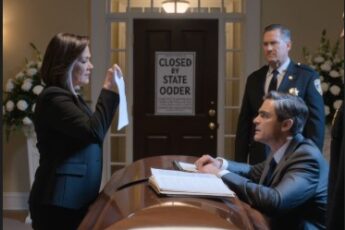
The school board had already voted to fire me when my former principal placed a stolen scholarship check beside my nameplate.
He told the room I had taken money from children.
Then a seventeen-year-old girl stood up in the back row and said, “Ask him why my mother was paid to accuse her.”
My name is Caroline Hayes. I’m fifty-one, and I live in Tulsa, Oklahoma.
I had taught English at Roosevelt High School for twenty-six years.
The building was old.
The radiators clanged in winter.
Rain leaked through the library ceiling.
But the students mattered to me.
Many came from families where college felt impossible.
That was why I created the Roosevelt Promise Fund.
Local businesses donated.
Former students sent checks.
Every spring, we awarded four seniors enough money to cover their first year of community college.
Principal Thomas Reed helped me start it.
He had once been my favorite teacher.
Later, he became my mentor.
When my husband died, Thomas organized meals for my family.
When I doubted myself, he told me I was the heart of the school.
I trusted him completely.
Then forty thousand dollars disappeared from the scholarship account.
The bank records showed transfers authorized with my password.
A deposit slip carried my signature.
Security footage showed someone in my red coat entering the school office after midnight.
Thomas called me into his office.
“You need to resign quietly,” he said.
“I did not take that money.”
“The evidence says otherwise.”
“You know me.”
His face became cold.
“I know what desperate people can do.”
My daughter had recently undergone surgery.
Everyone knew the medical bills were crushing me.
Thomas used that against me.
He told the board I had borrowed money from coworkers.
He said I had asked whether scholarship funds were ever audited.
Both statements were twisted versions of innocent conversations.
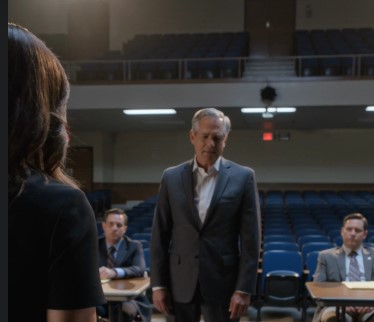
The disciplinary hearing was held in the school auditorium.
Rows of empty blue seats disappeared into darkness.
The board sat behind folding tables on the stage.
Teachers watched from the aisle.
Students gathered near the back doors.
Thomas wore a charcoal suit.
I wore the same black dress I had worn to my husband’s funeral.
The board attorney displayed the stolen check.
My signature appeared across the bottom.
Thomas looked at me with practiced sadness.
“Caroline, admitting the truth may help you avoid criminal charges.”
I stared at him.
“You planted this.”
“How dare you accuse me.”
“You are destroying my life.”
He lowered his voice.
“You destroyed it yourself.”
The board voted.
Six to one.
Termination.
They also planned to report me to the state, which could permanently revoke my teaching license.
Then Maya Collins stood in the back row.
She was one of our scholarship finalists.
Her hands were shaking.
“Please let me speak.”
Thomas stepped forward.
“This is not a student matter.”
Maya held up her phone.
“My mother told me to stay silent. But Mrs. Hayes is the reason I applied to college.”
The board chair allowed her onto the stage.
Maya placed a bank envelope on the table.
Inside were five thousand dollars in cash and a handwritten note.
The note promised her mother another payment after I was arrested.
Thomas stopped breathing.
I recognized the handwriting.
It was his.
Maya opened an audio file.
Her mother’s voice came first.
“I will say Caroline asked me to cash the scholarship check. But you promised my daughter would still receive her award.”
Then Thomas answered.
“Once Caroline is gone, the board will approve the land sale. No one can discover that the missing scholarship money was actually used to—”
👇👇 Part 2 in the comments👇👇
=== PART 2 — goes in the comments ===
“—pay the company buying the athletic field.”
The auditorium erupted.
Thomas reached for the phone.
Maya pulled it away.
The recording continued.
He had secretly agreed to sell the school’s athletic field to a private developer.
The field had been donated decades earlier with one condition.
It could never be sold while the Roosevelt Promise Fund remained active.
Thomas needed the scholarship program destroyed.
And he needed someone else blamed for the missing money.
He chose me.
The red coat in the security footage belonged to his wife.
The person entering my password was Thomas himself.
He had copied it from a grant application I completed in his office.
The forged signature came from an old recommendation letter.
Maya’s mother had been paid to claim I asked her to cash the check.
But guilt frightened her.
She gave Maya the money, the note, and the recording.
The board attorney compared Thomas’s handwriting with the payment note.
Then a technology specialist checked the original bank access logs.
Every transfer came from the computer in the principal’s office.
Not my classroom.
The board chair looked at Thomas.
“You framed a teacher to conceal an illegal property deal.”
Thomas pointed at Maya.
“She is a frightened child repeating her mother’s story.”
Maya lifted her chin.
“I recorded you myself.”
Police officers entered through the side doors.
Thomas was removed from the stage while former students watched in silence.
The termination vote was canceled that night.
My record was cleared.
The state never suspended my license.
The developer returned the money rather than face charges, and the athletic field remained school property.
Thomas was prosecuted for fraud, forgery, bribery, and theft.
He lost his position, his pension, and the respect he had spent decades building.
Maya received the scholarship she had earned.
So did the other three students.
The following spring, I stood on the football field as they crossed the graduation stage.
A new sign had been placed beside the gate:
ROOSEVELT PROMISE FIELD — NOT FOR SALE.
Thomas tried to take my name from the classroom door.
Instead, his name disappeared from the school, while mine remained exactly where my students had always found it.