The judge was about to take away the foster daughter I had raised for six years when my sister walked into court wearing the necklace our mother was buried in.
She claimed the child belonged with “real family.”
Then the little girl looked at her and whispered, “That’s the woman who told me to lie.”
My name is Rachel Morgan. I’m forty-three, and I live in Roanoke, Virginia.
Six years ago, my younger sister, Amanda, left her newborn daughter at the hospital.
No goodbye.
No explanation.
Just a signed form saying she could not care for her.
I was thirty-seven then.
Single.
Working long shifts as a pharmacy technician.
I had no nursery.
No savings.
No idea how to raise a baby.
But when the social worker placed tiny Sophie in my arms, she wrapped her fingers around mine.
I brought her home.
I learned bottles.
Fevers.
School forms.
Nightmares.
I became the person she called Mom.
Amanda disappeared.
For years, we heard nothing.
Then my mother died.
At the reading of her will, Amanda learned Mom had left the family house to Sophie.
Not to me.
Not to Amanda.
To the granddaughter she believed had been abandoned.
The house was modest.
But it sat on four acres near the edge of Roanoke.
A developer had offered nearly nine hundred thousand dollars for the land.
Two weeks later, Amanda filed for custody.
She claimed she had recovered from a difficult period and wanted her daughter back.
I wanted to believe her.
Then she asked whether I would sell the property once Sophie came home.
That was when I understood.
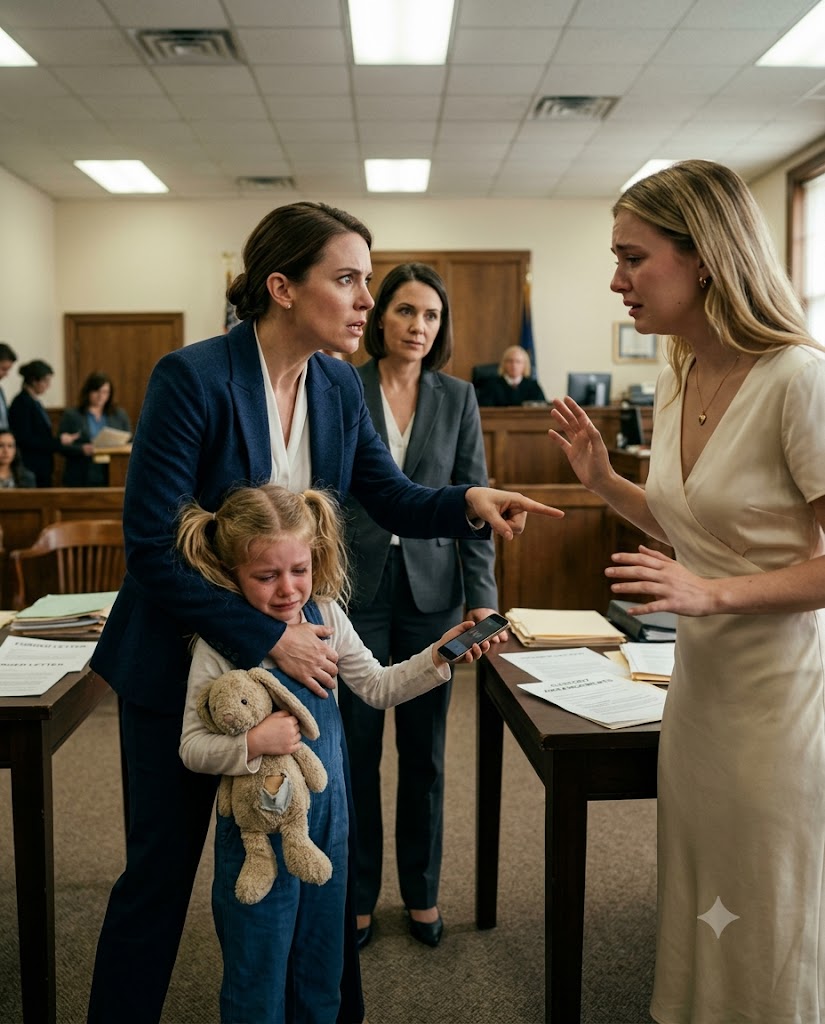
The custody hearing was held in a small courtroom with faded wooden benches and buzzing fluorescent lights.
Sophie sat outside with a child advocate.
Amanda wore a cream dress and Mom’s gold heart necklace.
I stared at it.
“That necklace was buried with Mom.”
Amanda touched it calmly.
“Mom gave it to me before she died.”
“No, she didn’t.”
Her attorney interrupted.
“This hearing is about the child.”
Amanda turned toward the judge and began crying.
She said I had kept Sophie from her.
She said I taught Sophie to call me Mom.
She said I had pressured our mother to place the house in Sophie’s name.
Every word was a lie.
Then Amanda’s attorney handed the judge a letter.
It was supposedly written by me.
It claimed I only wanted custody because I controlled Sophie’s inheritance.
My signature was at the bottom.
I felt sick.
“I never wrote that.”
Amanda looked at me with tears still on her face.
“You told me yourself.”
“How dare you.”
“You were afraid I would come back.”
The judge studied the letter.
If he believed it, I could lose Sophie.
And Amanda would gain control of the property as her legal guardian.
Then the child advocate entered with Sophie.
My little girl looked pale.
She clutched the stuffed rabbit she had slept with since infancy.
The judge asked her one gentle question.
“Did anyone tell you what to say today?”
Sophie looked at Amanda.
Then she nodded.
Amanda’s smile vanished.
“She told me to say Aunt Rachel scares me,” Sophie whispered. “She said if I did, we would get a big house.”
The judge leaned forward.
Amanda stood suddenly.
“She is confused.”
Sophie began to cry.
Then she pulled a small phone from inside the rabbit’s torn pocket.
“Aunt Amanda gave me this,” she said. “She made me listen to her words every night.”
The child advocate turned on the phone.
A recording began.
Amanda’s voice filled the courtroom.
“Once the judge gives you to me, I can sell Grandma’s land. Then I’ll send Rachel away, and no one will ever know that the letter was—”
👇👇 Part 2 in the comments👇👇
=== PART 2 — goes in the comments ===
“—copied from her old employment forms.”
Amanda froze.
The recording continued.
She told Sophie exactly what to say.
When to cry.
How to describe being frightened.
Then another voice spoke.
It belonged to Amanda’s attorney.
He warned her that the forged letter had to look convincing or the judge might leave the property under court protection.
The attorney stood.
“This recording was made illegally.”
The judge looked at him.
“You appear to be discussing manufactured evidence in a custody case.”
No one moved.
The child advocate opened the phone’s message history.
Amanda had sent Sophie repeated instructions.
One message said:
DO NOT CALL RACHEL MOM IN COURT. IF YOU DO, WE LOSE THE LAND.
I pulled Sophie into my arms.
She buried her face against me.
“I’m sorry,” she whispered.
“You were brave.”
The judge ordered the forged letter seized.
He also suspended Amanda’s custody petition immediately.
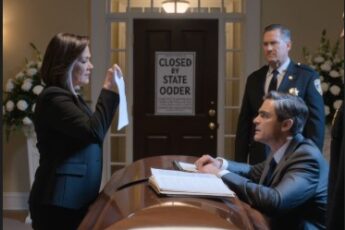
Investigators later proved she had taken Mom’s necklace from the funeral home before the casket was closed.
They found drafts of the false letter on her laptop.
Bank records showed she had already promised the property to a developer in exchange for an advance payment.
Her attorney withdrew from the case and was later charged with helping falsify evidence.
Amanda faced charges for forgery, attempted fraud, witness manipulation, and theft.
The court terminated her attempt to gain custody.
My adoption of Sophie, which had been delayed for years because Amanda could not be located, was finalized three months later.
The house remained in Sophie’s trust.
I was named its independent guardian, but I could not sell it for personal gain.
That was exactly what Mom had intended.
We kept the house.
The developer’s offer expired.
Sophie planted sunflowers along the back fence and painted her bedroom yellow.
Amanda was ordered to stay away unless future contact was approved by a therapist and the court.
She never gained control of the land.
She never gained control of Sophie.
The necklace was returned and placed beside Mom’s photograph in our living room.
Amanda walked into court calling herself real family.
Sophie’s courage showed everyone who had truly been her family all along.